
Pain Relief Without Medicines? Here’s How Physiotherapy Makes It Possible.
Pain has quietly become a part of everyday life for many people. Whether it’s a nagging
backache, stiff neck, joint pain, sports injury, or constant muscle tension, discomfort can easily
take over your daily routine and reduce your quality of life.
What if you could relieve pain without relying on medicines?
Physiotherapy offers a smarter, long-lasting solution. Instead of just hiding the pain, it targets the
root cause using guided exercises, hands-on techniques, and scientifically proven methods.
In this article, you’ll discover how physiotherapy can help you break free from painkillers, the
techniques it uses, and why it’s becoming the go-to choice for safe, effective, and natural pain
relief.
What Does Physiotherapy Really Do?
Physiotherapy, also called physical therapy, is a natural way to reduce pain and improve
movement.
Physiotherapists are trained experts who use simple methods like exercises, hands-on
treatment, and machines to help your body heal on its own.
The aim is not just quick relief, but long-term recovery.
Physiotherapy helps to:
● Reduce pain
● Improve movement and flexibility
● Strengthen weak muscles
● Prevent future injuries
It is commonly used for problems like:
● Back and neck pain
● Knee and joint pain
● Sports injuries
● Arthritis
● Recovery after surgery
● Muscle stiffness
If you’re a student looking to build a career in healthcare, PhysioSpire offers practical, skill-based courses to help you get started. Learn from experts and become industry-ready with real clinical knowledge.
Common Health Problems Treated with Physiotherapy
Physiotherapy is a natural and effective way to treat many types of pain and injuries—without
relying on medicines.
Here are some of the most common conditions where physiotherapy can help:
Back Pain
Back pain is one of the most common problems people face today. Physiotherapy uses
stretching, strengthening exercises, and posture correction to reduce pain and improve spine
health.
Neck Pain
Long hours on phones and laptops often lead to neck stiffness and discomfort. Physiotherapy
helps relieve this pain through gentle movements, hands-on treatment, and posture
improvement.
Knee Pain
Knee pain can be caused by arthritis, injuries, or weak muscles. Physiotherapy focuses on
strengthening the muscles around the knee and improving joint stability for better movement.
Sports Injuries
From muscle strains to ligament injuries, sports-related problems are very common.
Physiotherapy supports faster recovery, improves performance, and helps prevent future
injuries.
Shoulder Pain
Conditions like frozen shoulder or rotator cuff injuries can make simple movements difficult.
Physiotherapy helps restore strength, flexibility, and normal shoulder function.
Want to start your journey in physiotherapy? Join PhysioSpire’s Basic to Advanced course and gain hands-on experience, real patient handling skills, and strong clinical knowledge.
Techniques Used in Physiotherapy for Pain Management

Physiotherapists use a combination of techniques to reduce inflammation, improve blood flow,
and strengthen your body from within
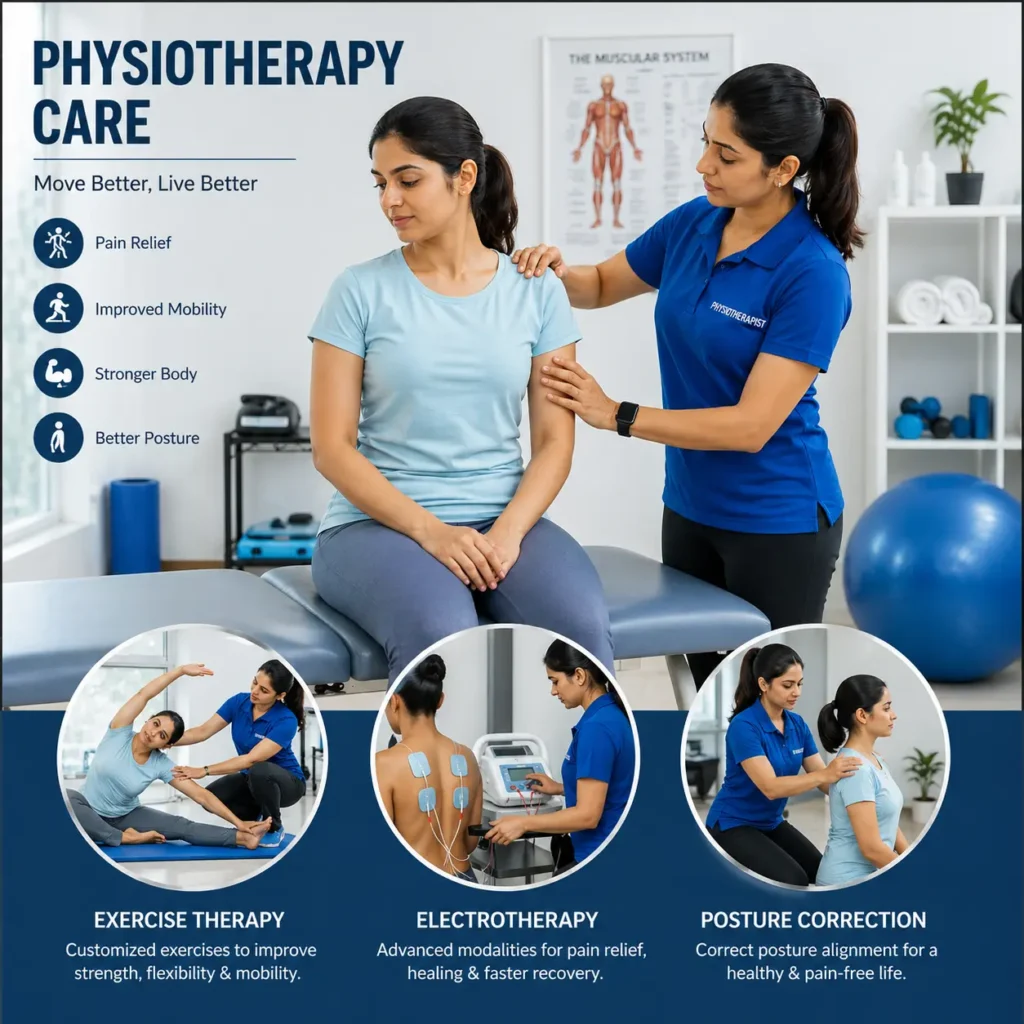
Exercise Therapy
Exercise is the heart of physiotherapy. Specially designed exercises help your body heal and
get stronger over time. These exercises:
● Build muscle strength
● Improve flexibility
● Increase joint movement
● Reduce stiffness
Manual Therapy (Hands-on Treatment)
Manual therapy involves skilled hands-on techniques to treat muscles and joints. It helps to:
● Reduce pain
● Improve movement
● Relax tight muscles
Common techniques include:
● Joint mobilization and manipulation
● IASTM (Instrument-Assisted Soft Tissue Mobilization)
● Dry needling
● Cupping therapy
● Taping
Electrotherapy
Electrotherapy uses advanced machines to reduce pain and speed up healing. These
treatments work by stimulating nerves and improving tissue repair.
Popular methods include:
● Ultrasound therapy
● TENS (Transcutaneous Electrical Nerve Stimulation)
● Laser therapy
Posture Correction
Poor posture is a major cause of long-term pain, especially in today’s screen-based lifestyle.
Physiotherapists guide you on:
● Correct sitting and standing positions
● Proper sleeping posture
Stretching & Mobility Exercises
Tight muscles and stiff joints can increase pain. Stretching exercises help to:
● Improve flexibility
● Increase movement
● Reduce stiffness
Key Benefits of Choosing Physiotherapy
Physiotherapy is becoming a top choice for people who want lasting pain relief without
depending on medicines. Here’s why:
Natural Healing
Physiotherapy helps your body heal on its own. It focuses on natural recovery methods, so you
can reduce pain without surgery or long-term medication.
Personalized Treatment
No two people have the same pain. That’s why physiotherapy offers customized treatment plans
based on your condition, lifestyle, and physical ability—giving you better and faster results.
Better Quality of Life
As pain reduces and movement improves, everyday tasks become easier. You can return to
your routine, stay active, and enjoy life without constant discomfort.
Cost-Effective Solution
Compared to surgeries or long-term use of medicines, physiotherapy is often more
affordable—while also providing long-term benefits.
How Physiotherapy Helps Manage Chronic Pain
Conditions like arthritis, slip disc, and sciatica don’t heal overnight—they need consistent care
and the right approach. Physiotherapy offers a natural and effective way to manage these
conditions without depending on painkillers.
It focuses on long-term recovery by helping your body become stronger, more flexible, and
better at handling daily activities.
How Physiotherapy Helps
Builds strength with guided exercise routines
Improves daily habits and lifestyle
Provides natural, drug-free pain relief
Enhances strength, flexibility, and mobility
When Should You Consider Physiotherapy for Chronic Pain?
If you’ve been dealing with pain for a long time, it’s a sign your body needs attention. Instead of
relying only on medicines, it may be the right time to seek help from a physiotherapist.
A physiotherapist can understand the root cause of your pain and create a personalized
treatment plan just for you. With a natural and non-invasive approach, physiotherapy helps you
take control of your recovery—without depending on painkillers.
You don’t have to live with pain or ignore it any longer.
Take the First Step If you’re ready to move towards a pain-free and active life, consider
consulting a physiotherapist today. With the right guidance and treatment, you can feel stronger,
healthier, and more confident in your daily life.
Why Physiotherapy is Becoming Essential in Modern Healthcare
Due to sedentary lifestyles, stress, and rising muscle and joint problems, physiotherapy has
become an important part of modern healthcare.
Doctors and specialists now often recommend it as a first-line treatment because it not only
reduces pain but also prevents future injuries and improves overall physical health—naturally
and effectively.
Ready to take the next step in your healthcare career? Contact PhysioSpire today and start learning the skills that truly matter in real-world practice.
Conclusion
Physiotherapy offers a smart and natural way to deal with long-term pain. Instead of just hiding
the symptoms, it focuses on finding the real cause of pain, fixing it, and helping your body
become stronger and more mobile.
Through targeted exercises, hands-on treatment, and movement-based techniques,
physiotherapy supports natural healing and long-lasting relief. It not only reduces pain but also
improves strength, flexibility, and overall body function.
Research and real-life results show that regular physiotherapy is one of the most effective ways
to manage chronic pain—without depending heavily on medicines.