
In today’s lifestyle of long working hours, constant screen time, and prolonged sitting or
standing, poor posture has quietly become a daily habit—often showing up later as nagging
aches and discomfort. So, what exactly is good posture, and why does it matter so much.?
In this blog, we’ll uncover why posture truly matters, explore the benefits of maintaining good
alignment, and share simple ways to build better posture habits into your daily life.
Understanding Posture: A Brief Overview
Posture is simply the way you hold and position your body—whether you’re standing, sitting, or
lying down. It’s all about keeping your bones, muscles, joints, and ligaments in proper alignment
so your body can function comfortably and efficiently, without unnecessary strain.
There are two main types of posture:
Dynamic posture—how your body stays aligned while you’re moving, like walking or
exercising.
Static posture—how you hold your body when you’re still, such as sitting, standing, or
sleeping.
Why Posture Matters in Everyday Life
Posture is something we rarely notice—until discomfort, fatigue, or back pain makes it
impossible to ignore. The way you sit, stand, and move influences far more than just your
appearance. Good posture is the foundation of a healthy body—it supports your spine, improves
breathing, boosts circulation, aids digestion, enhances productivity, and even uplifts your mood
and confidence
What Is Good Posture—and Why Does It Matter?
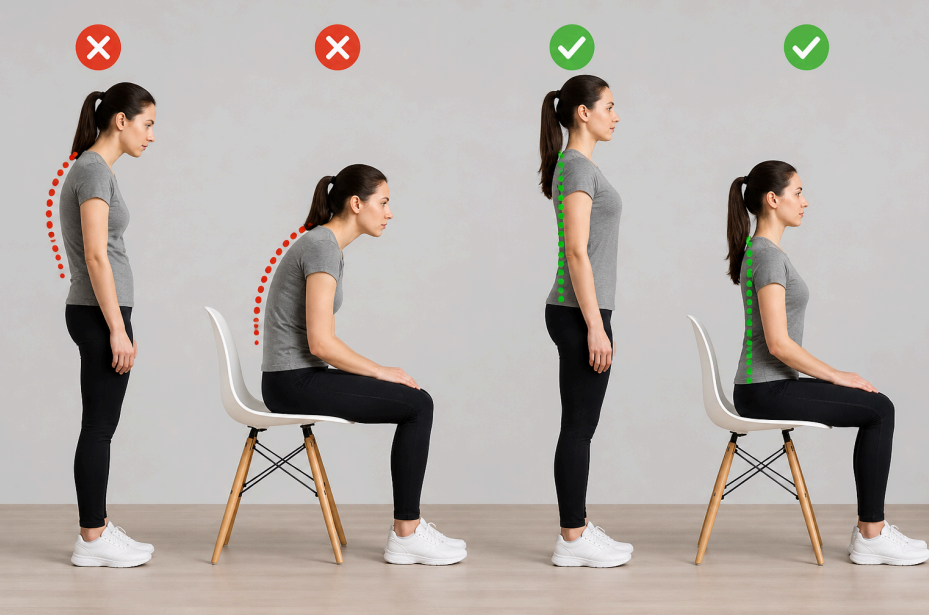
Good posture is all about keeping your body in its most natural, balanced alignment—where
muscles, joints, and ligaments work efficiently with minimal strain. Think of it as your body’s
“power position,” where everything functions smoothly and effortlessly.
In everyday movements:
● Sitting: Feet grounded, back supported, shoulders relaxed, and screen at eye level.
● Standing: Weight evenly distributed, spine neutral, shoulders gently drawn back.
● Walking: Tall posture, steady steps, and controlled, confident movement.
Why posture matters in daily life:
It protects your spine by reducing unnecessary stress and strain.
● It improves breathing and circulation, helping your body perform at its best.
● It sharpens focus, boosts mood, and enhances productivity.
● It lowers the risk of back pain, fatigue, and long-term musculoskeletal issues.
The Benefits of Good Posture
Good posture isn’t just about standing tall—it’s a game-changer for your entire body. From
reducing pain to boosting confidence, the benefits go far beyond appearance.
Reduces strain on your back
Poor posture—especially prolonged sitting and slouching—puts excessive pressure on your spine
and surrounding structures. Over time, key muscles like your core and glutes weaken, leaving
your back unsupported. Maintaining good posture and strengthening these muscles helps
prevent and relieve back pain.
Better Movement, Stronger Joints
Proper alignment allows your muscles and joints to work efficiently, reducing unnecessary strain
and wear. It also lowers the risk of early joint degeneration, such as osteoarthritis, keeping your
body moving smoothly for longer
Boost Your Mood Naturally
An aligned spine allows your lungs to expand fully, increasing oxygen flow and energy levels.
This activates your body’s relaxation response, reduces stress hormones, and can instantly lift
your mood—sometimes all it takes is simply sitting up straight
A Healthier, Stronger Spine
Good posture supports the spine and improves blood flow to its surrounding tissues, helping
maintain strong muscles, flexible joints, and healthy nerves as you age.
More Energy, Less Fatigue
When your body is properly aligned, muscles work efficiently without overexertion. Combined
with better oxygen intake, this leads to higher energy levels throughout the day.
Relief for Neck & Shoulders
Long hours of sitting can cause stiffness and tightness in the neck and shoulders. Good posture
minimizes strain and keeps these muscles relaxed and supported.
Better Digestion & Circulation
Poor posture compresses internal organs, slowing digestion and blood flow. Sitting and standing
upright promotes better circulation and smoother digestive function.
Stronger Core & Upper Back
Good posture naturally engages and strengthens your core and upper back muscles, especially
around the shoulder blades, providing better support for your spine
Stand Taller, Look Better
Good posture instantly makes you appear taller, more balanced, and physically fit.
Confidence That Shows
Standing or sitting tall doesn’t just change how you look—it changes how you feel. Better posture
enhances confidence, reduces stress, and helps you present your best self to the world.
If you want to explore safe and effective ways to manage pain without relying on medicines, check out our detailed blog on Physiotherapy for Pain Relief Without Medicines and learn how physiotherapy can support natural recovery and long-term wellness.
✨ Good posture isn’t a small habit—it’s a powerful foundation for a healthier, stronger, and more confident you.
Posture: Your First Line of Defense Against Orthopaedic Problems
Good posture isn’t just a habit—it’s a powerful tool for protecting your body from long-term
orthopaedic issues. When your body stays properly aligned, it reduces stress, improves
movement, and keeps your joints and muscles functioning at their best
Here’s how good posture supports your orthopaedic health:
● Minimizes Wear & Tear: Proper alignment reduces unnecessary stress on bones,
muscles, and joints, helping them last longer.
● Protects Your Joints: Healthy posture supports joint function and lowers the risk of
conditions like arthritis.
● Prevents Chronic Pain: Staying aligned reduces strain on the back, neck, and joints,
keeping persistent pain at bay.
● Balances Body Weight: Even weight distribution prevents excess pressure on the
spine, hips, and knees.
● Reduces Disc Problems: Good posture lowers the risk of issues like herniated discs in
the spine.
● Prevents Muscle Strain: Efficient muscle use avoids imbalances, tightness, and
overuse injuries.
● Lowers Surgical Risk: By preventing structural problems, good posture can reduce
the need for corrective procedures.
● Boosts Quality of Life: Small posture improvements lead to better mobility, comfort,
and overall well-being.
Simple Ways to Check Your Posture (And Fix It Early!)
Being aware of your posture is the first step toward preventing pain and long-term issues. The
good news? You can easily assess it yourself with these simple methods:
● Mirror Check: Stand in front of a mirror and observe your alignment—your head,
shoulders, and hips should be level and in line, not tilted or uneven.
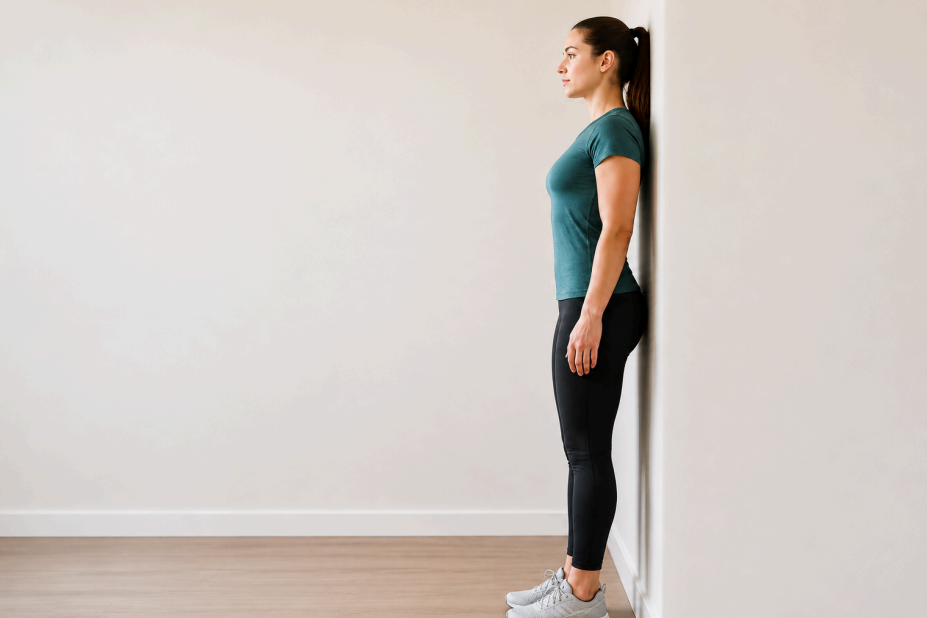
● Wall Test: Stand with your back against a wall. Your head, shoulders, and hips should
touch the wall, with a small natural gap at your lower back.
● Plumb Line Test: Use a string with a weight and stand straight beside it. Ideally, it
should align through your ear, shoulder, hip, knee, and ankle.
● Photo Analysis: Take photos from the front, side, and back. Comparing these with
ideal posture can help you spot imbalances or misalignment.
● Expert Assessment: A physiotherapist or chiropractor can provide a detailed
evaluation and guide you with personalized corrections.
Want to experience our physiotherapy training and guidance before joining? Book your free session through our Demo Class Page and explore how PhysioSpire can help you learn and grow with expert support.
✨ Regular posture checks help you stay aligned, avoid discomfort, and build healthier habits for life.
Everyday Moments Where Your Posture Makes a Difference
Posture isn’t just something to “fix”—it’s something you live with all day. Small adjustments in
daily activities can make a big impact on your comfort, energy, and long-term health.
Sitting at Your Desk
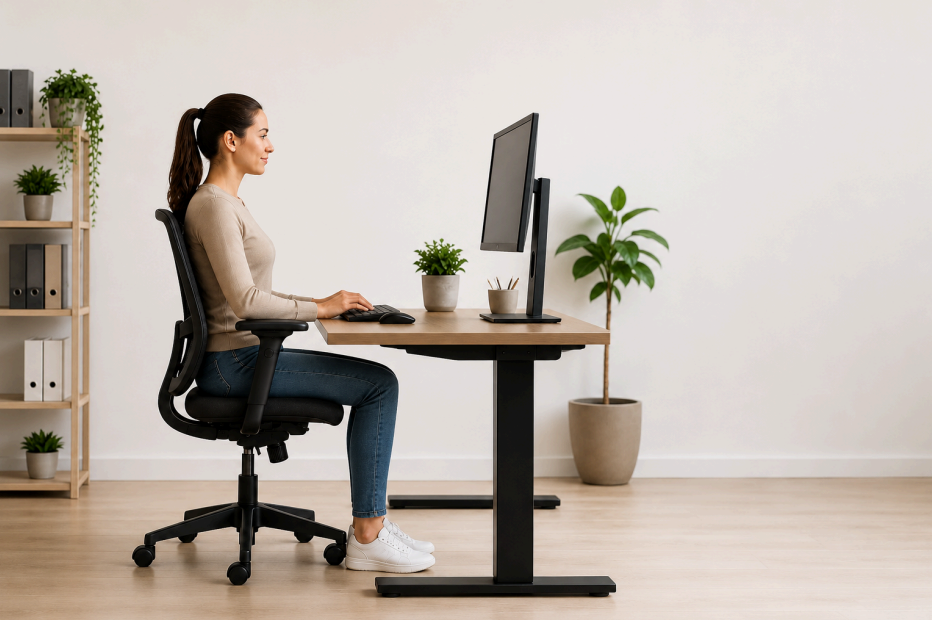
Support your back and maintain a neutral spine. Avoid leaning forward toward your screen, and
take regular breaks to stretch and reset your posture.
At Work or While Studying
Set up your chair, desk, and screen at eye level. Keep your feet flat on the floor and shoulders
relaxed. Short posture breaks throughout the day can prevent stiffness and fatigue.
Sleeping for Spine Health
Choose a supportive mattress and pillow. Sleeping on your back or side helps maintain natural
alignment, while stomach sleeping can strain your spine.
During Exercise & Workouts
Prioritize proper form over speed or repetitions. Keep your spine neutral and use correct
techniques to prevent injuries and get the most out of your workouts.
Standing & Walking
Distribute your weight evenly on both feet. Keep your shoulders back, chest open, and avoid
slouching—even while waiting or casually walking.
Get access to expert physiotherapy learning and exclusive resources for an entire year with the PhysioSpire Membership — only ₹365 for 365 days of valuable content, guidance, and continuous learning support.
✨ Regular posture checks help you stay aligned, avoid discomfort, and build healthier habits for life.
Improve Your Posture: Simple Habits That Make a Big Difference
Building better posture doesn’t mean making drastic changes—it’s about small, consistent habits
that add up over time.
● Create an Ergonomic Workspace
Set up a chair and desk that support your natural alignment. Keep your screen at eye
level and your back well-supported.
● Strengthen & Stretch Regularly
Incorporate core exercises like planks, along with stretching or yoga, to support your
spine and improve flexibility.
● Use Smart Reminders & Tools
Posture trackers, ergonomic chairs, or even simple phone reminders can help you stay
aware and avoid slouching.
● Move More, Sit Less
Take a break every 30–60 minutes. Stand, stretch, and reset your posture—especially if
you spend long hours sitting or on your phone.
● Stay Mindful
Stay Mindful
Be conscious of how you sit, stand, and even breathe. Small corrections throughout the
day can create lasting change.
✨ Better posture isn’t about perfection—it’s about consistency.
Quick Posture Reset: Your Daily Checklist
Make these simple habits part of your routine to stay aligned, comfortable, and pain-free:
✔️ Sit tall with your back straight and shoulders relaxed
✔️ Keep your feet flat on the floor while sitting
✔️ Avoid crossing your legs for long periods
✔️ Stand with your weight evenly balanced on both feet
✔️ Take a quick break every hour—stand, stretch, or walk
✔️ Keep your head aligned—ears in line with your shoulders
✔️ Choose a chair that supports your spine’s natural curve
✔️ Breathe deeply to keep your chest open and shoulders relaxed
✨ Small posture checks throughout the day can lead to big long-term benefits.
Conclusion: Small Posture Changes, Big Health Benefits
Good posture is more than just standing tall—it’s a foundation for better health, movement, and
confidence. Proper body alignment helps reduce back, neck, and shoulder pain while improving
breathing, digestion, energy levels, and overall well-being. On the other hand, poor posture can
gradually contribute to discomfort and long-term health concerns.
The good news? Improving posture starts with small daily habits—sitting correctly, moving
regularly, sleeping in supportive positions, and choosing comfortable footwear. Adding simple
strengthening and mobility exercises into your routine can further support spinal health and
help you maintain better posture for life.
✨ A few mindful adjustments today can lead to a stronger, healthier, and more confident tomorrow.