
A sedentary lifestyle,is a pattern of behavior characterized by prolonged
inactivity and limited participation in physical exercise or movement.
Sedentary behavior is different from physical inactivity. It refers to any
waking activity that involves very low energy expenditure while sitting,
reclining, or lying down. However, spending most of the day sitting does not
always mean a person has a sedentary lifestyle. A sedentary lifestyle is
generally described as engaging in sedentary behaviors for more than six
hours per day.
Common Health Effects and Risks of a Sedentary
Lifestyle
A sedentary lifestyle can negatively affect both physical and mental health.
Spending long hours sitting or remaining inactive increases the likelihood of
developing several health conditions. Below are some of the most common
risks associated with prolonged sedentary behavior.
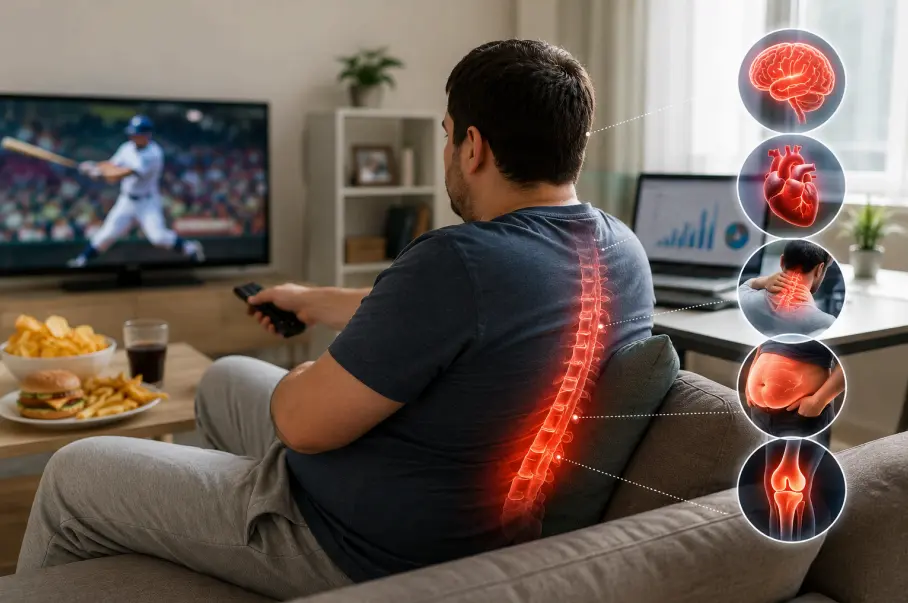
1. Musculoskeletal Problems
Long hours of sitting place excessive stress on muscles and joints,
especially in the neck, shoulders, hips, and lower back. Poor posture can
further contribute to chronic pain, stiffness, herniated discs, and other
musculoskeletal disorders.
2. Mental Health Concerns
A sedentary lifestyle can also impact emotional well-being. Research
indicates that individuals who are less active are more likely to experience
stress, anxiety, and depression. Physical activity promotes the release of
endorphins, which help improve mood and mental health.
3. Obesity and Weight Gain
One of the major consequences of inactivity is weight gain. When the body
remains inactive for extended periods, fewer calories are burned, leading to
fat accumulation. Over time, this may result in obesity, which is strongly
linked to conditions such as type 2 diabetes, hypertension, and heart
disease
4. Cardiovascular Disease
Physical inactivity is a significant contributor to cardiovascular problems.
Sedentary behavior may increase blood pressure, reduce levels of “good”
HDL cholesterol, and encourage fatty deposits in blood vessels. These
changes raise the risk of heart disease and stroke.
5. Type 2 Diabetes
Prolonged inactivity affects the body’s ability to use insulin effectively,
leading to poor blood sugar control. This increases the risk of insulin
resistance and type 2 diabetes. Regular physical activity helps improve
glucose regulation and reduces this risk.
6. Increased Cancer Risk
Studies suggest that prolonged inactivity may increase the risk of certain
cancers, including breast, colon, and endometrial cancers. Reduced
movement may contribute to chronic inflammation and abnormal cell
growth.
7. Weak Muscles and Stiff Joints
Lack of regular movement weakens muscles and decreases joint flexibility.
This may lead to stiffness, poor posture, reduced mobility, and conditions
such as osteoarthritis
8. Poor Sleep Quality
Inactivity can interfere with the body’s natural sleep cycle, making it difficult
to fall asleep and maintain restful sleep. Pain and discomfort caused by
prolonged sitting may also affect sleep quality
9. Postural Abnormalities
Extended sitting, especially while using computers or mobile devices, often
results in poor posture. Over time, this may lead to spinal alignment
problems such as kyphosis or scoliosis.
10. Decline in Brain Function
Excessive sitting may negatively affect cognitive performance, including
memory, concentration, and focus. Regular physical activity improves blood
flow to the brain and supports better cognitive health, while inactivity may
increase the risk of neurodegenerative diseases.
Good posture is just one part of maintaining overall physical health. Understanding how posture affects your body, confidence, and daily performance can help you prevent long-term discomfort and injuries. Read our related guide on Why Posture Matters for Health and Confidence to learn more about the benefits of proper posture and practical ways to improve it.
Causes of a Sedentary Lifestyle
Modern lifestyles and technological advancements have significantly
increased sedentary behavior. Many people spend most of their day sitting
due to work, transportation, and entertainment habits.
Common Causes Include:
● Desk-based jobs: Office work often requires prolonged sitting in
front of computers.
● Excessive screen time: Watching television, gaming, or using
smartphones and laptops for long hours contributes to inactivity.
● Long commuting hours: Travelling by car, bus, or train often
involves extended periods of sitting.
● Lack of motivation: Fatigue or low energy after work may
discourage people from exercising.
● Chronic pain, injuries, or disabilities can limit
physical activity.
Although sedentary behavior has become increasingly common,
understanding its risks is essential for maintaining long-term health.
How to Overcome a Sedentary Lifestyle
Making small but consistent lifestyle changes can significantly improve
health and reduce the harmful effects of prolonged inactivity.
Practical Tips to Stay Active
● Take regular breaks: Stand up, stretch, or walk around every hour.
● Choose stairs over elevators: Small changes in daily habits can
increase physical activity.
● Schedule exercise sessions: Set aside time for activities such as
walking, cycling, or swimming.
● Participate in active hobbies: Gardening, dancing, hiking, or sports
can make movement enjoyable.
● Stay active at work: Use a standing desk, take walking meetings, or
stretch during breaks.
● Find support and motivation: Joining fitness groups or exercising
with friends can improve consistency
Many people rely on medications for temporary relief, but physiotherapy focuses on addressing the root cause of pain. Through targeted exercises, manual therapy, and personalized treatment plans, it can help reduce discomfort naturally and improve long-term mobility. Read our related blog, Pain Relief Without Medicines? Here’s How Physiotherapy Makes It Possible, to discover how physiotherapy supports lasting recovery without depending on medication.
Exercises That Promote Better Health

Cardiovascular Exercises
Activities such as brisk walking, jogging, cycling, swimming, and dancing
improve heart health, stamina, and calorie burning.
Strength Training.
Resistance exercises, including weightlifting and bodyweight workouts,
increase muscle strength, bone density, and metabolism
Flexibility Exercises
Yoga, Pilates, and stretching routines improve flexibility, posture, balance,
and mobility.
High-Intensity Interval Training (HIIT)
Short bursts of intense activity followed by recovery periods help improve
cardiovascular fitness and burn calories efficiently.
Outdoor Activities
Hiking, sports, and gardening provide physical exercise while encouraging
relaxation and enjoyment of nature.
Group Fitness Programs
Classes such as aerobics, Zumba, spinning, and kickboxing can boost
motivation and create a sense of community.
Mind-Body Activities
Practices like tai chi and meditation help reduce stress, improve mental
well-being, and promote relaxation.
Health experts recommend at least 150 minutes of moderate-intensity
exercise or 75 minutes of vigorous activity per week, along with
strength training exercises on two or more days weekly. Consistency plays
a vital role in achieving long-term benefits.
Ergonomic Adjustments: Proper chairs, desks, and workstation setup
can reduce physical strain.
Injuries Associated with a Sedentary Lifestyle
A lack of movement and poor posture can lead to several physical injuries
and repetitive strain conditions.
Common Injuries Include:
● Neck and Shoulder Pain: Frequently linked to poor sitting posture.
● Lower Back Pain: Prolonged sitting increases pressure on spinal
discs, leading to discomfort and stiffness.
The Rise of Sedentary Living
Technological advancements and automation have made daily life more
convenient but less physically demanding. Activities such as desk work,
driving, screen use, and entertainment often involve prolonged sitting,
contributing to the growing prevalence of sedentary lifestyles worldwide.
Reducing Sedentary Lifestyle Risks
The health risks associated with prolonged inactivity can be serious if
ignored. However, incorporating regular movement, exercise, and
ergonomic practices into daily life can greatly improve overall health and
quality of life. Small lifestyle modifications made consistently can help
prevent chronic disease, improve physical and mental well-being, and
support a healthier future.
Reducing Sedentary Lifestyle Risks
The health risks associated with prolonged inactivity can be serious if
ignored. However, incorporating regular movement, exercise, and
ergonomic practices into daily life can greatly improve overall health and
quality of life. Small lifestyle modifications made consistently can help
prevent chronic disease, improve physical and mental well-being, and
support a healthier future.